
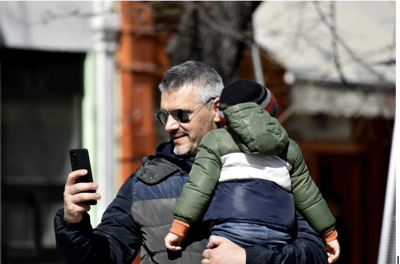
Many families in Quebec have a daily life that is partly online. Moms and dads check their children's school portals, use their mobile phones to settle invoices and manage bank accounts, while the kids access digital platforms for schoolwork and stay in touch with relatives. A family album is shared right away with extended family living in the West Island or other areas, and vital papers are increasingly in digital format rather than paper. The comfort of this method is plain to see, but it also means that family members now have more sensitive personal data to protect than ever before.
Everyday Risks Are Easily Overlooked
Phishing is one of the areas of serious concern that comes to mind. It is the sending of messages designed to appear as if they were from a reliable source. For instance, a parent can receive an email from the school requesting confirmation, or an SMS from the bank alerting them to a possible fraudulent transaction. The Canadian Anti-Fraud Centre notes that phishing is a way of getting people's passwords, personal information, and banking details through very credible emails, texts, and links, mostly.
To be honest, that's it: you should consider not pressing the key just yet, but rather go back and think about it for at least one moment. If, for whatever reason, the communication asks you to take a critical action, fill in personal data, or contains a strange link, contact the organization via their official website or phone number. In addition, the Canadian Anti-Fraud Center suggests making sure one takes a good look at web addresses and doesn't give in to suspicious links in emails.
This issue of privacy is another big concern. It often happens that people don't understand how much information about themselves the different apps, websites, and online tools that we rely on every day can collect. Quebec Law 25 has improved quite a bit; these privacy safeguards and the transparency rules related to personal data show just how important this topic is in responsible data management in a digital age.
Little Habits, Big Impact
Digital safety doesn't require you to become a family of tech experts. Only a few simple routines are enough to lower the risks.
Starting with passwords is the first step. Strong, unique passwords should be used for essential accounts rather than reusing the same password across multiple services. If possible, use multi-factor authentication, particularly for email, banking, and other accounts where sensitive data is stored.
Families are also advised to upgrade their devices and apps. A large number of security bug fixes are included in software patches. As a result, delaying updates leaves the system exposed to various types of attacks for longer.
Educating the family about what may be a phishing attempt could be very beneficial. Kids can be taught not to click unknown links, and parents can start a habit of verifying unexpected messages before answering. Canada's Cyber Centre's Get Cyber Safe materials provide useful information for families and individual users.
Protecting Photos and Important Family Documents
Family life is full of treasured memories and priceless documents. Part of digital safety is ensuring these precious items are well safeguarded.
How many birthday pictures, videos of family trips, certificates, school records, insurance documents, and other invaluable files are you holding together on one device? Putting everything into one phone or computer is easy, but it can create a great risk for these valuable items. In case of loss, hardware damage, hardware failure, or accidental deletion, it is highly likely that the family will lose their most invaluable memories and documents that are hard to reproduce. Taking an off-site backup—a secure copy of your data is a helpful way to make sure nothing is lost.
Online storage is a good idea for families. Storing photos in the cloud also allows the user to back up their pictures just in case they lose or break their phone. With a cloud system like this, people can upload photos and documents to the cloud and then retrieve them on another device if their original device is lost, broken, or corrupted. The cloud storage idea is just to protect files from an accident and overengineering is not needed. Families can start by picking only the most important files and making copies in a safe place. This action itself is a solid move towards safeguarding these files permanently.
A Safer Digital Routine for Quebec Households
Digital safety doesn't have to be the biggest reason for your concern for families in Montreal, the West Island, and various Quebec communities. To achieve this, you only need to make digital safety part of the household routine. Privacy settings can be set on different devices at regular intervals, not only on one device but across the whole family. Remove the apps that have been lying around unused from their respective phones. Review the permissions given to the apps; if they have access to personal data. And at the end, always do a regular backup of important files.
We also tend to forget that cautiousness does not always mean paranoia. Online money management systems, digital textbooks, and chat tools like email and video conferencing have really changed people's lives for the better. The point of the whole matter is to make a conscious decision to enjoy these technologies to the fullest.
A year like 2026 will be a time when a family's digital security will be almost as routine as locking the front door: it will be the norm rather than a scary thing nobody wants to do. With the best possible security passwords, careful clicking, the habit of privacy, and trustworthy backups, Quebec parents and their kids will not only protect their valuable information but also the memories in the photos or videos that they cherish the most


(0) comments
Welcome to the discussion.
Log In
Keep it Clean. Please avoid obscene, vulgar, lewd, racist or sexually-oriented language.
PLEASE TURN OFF YOUR CAPS LOCK.
Don't Threaten. Threats of harming another person will not be tolerated.
Be Truthful. Don't knowingly lie about anyone or anything.
Be Nice. No racism, sexism or any sort of -ism that is degrading to another person.
Be Proactive. Use the 'Report' link on each comment to let us know of abusive posts.
Share with Us. We'd love to hear eyewitness accounts, the history behind an article.