Record-breaking January and February temperatures, early snowmelt, thawed soils across the plains, rain-on-snow flooding, and earlier-than-normal streamflow peaks have producers, water managers, and firefighters concerned about the rest of the year. Their concerns highlight an important gap between what we know with high confidence about Montana's changing climate and what we can predict in any given season.
The current U.S. Drought Monitor shows approximately 86% of Montana in drought, with 32% experiencing severe to extreme drought. Given current conditions, I expect areas of drought to intensify through the summer as temperatures increase. Where the worst drought will develop and whether recent summer rains provide temporary relief remain uncertain.
Our ability to make seasonal weather predictions needs to be improved.
Seasonal outlooks are uncertain because they must account for dynamic atmosphere, ocean, and land-moisture conditions — making them highly sensitive to assumptions about the starting conditions and availability of adequate local measurements. Weather patterns are influenced by large-scale climate variations that develop over weeks, months, and years, including El Niño and La Niña events, the Pacific Decadal Oscillation, Madden-Julian Oscillation, and Arctic Oscillation. These oscillations shift storm tracks, temperature, and precipitation across the globe.
Currently, attention is focused on the El Niño event that could strengthen later this year. Historically, El Niño winters tend to be warmer and drier across western Montana, particularly west of the Continental Divide; the impacts east of the Divide are generally weaker and more variable. A stronger — even "super" — El Niño increases the odds of these historical patterns but does not guarantee them. Every event is different, and no two El Niños produce identical outcomes.
Summers are more complicated. While El Niño can lead to above-average precipitation across the northern Rockies, local thunderstorms, soil moisture, and atmospheric circulation patterns ultimately determine whether a location experiences drought relief or prolonged dryness.
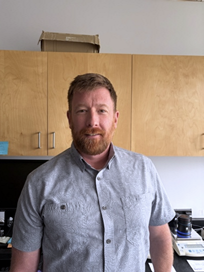
Kelsey Jensco
Ironically, scientists are more certain about long-term climate projections than monthly or seasonal forecasts. Climate models focus on big-picture trends arising from steadily increasing greenhouse gases, whereas seasonal forecasts reflect the chaotic nature of daily weather. The Montana Climate Assessment shows strong agreement among climate models that temperatures will continue increasing across the state in the coming decades. Rising temperatures mean that today's "normal" climate is warmer than it was a generation ago, and this changing baseline is uncharted territory that further complicates seasonal forecasts.
Climate projections for the coming decades consistently point toward earlier snowmelt, earlier soil thaw, earlier onset of the growing season, larger spring precipitation events, and hotter, drier summers. Warmer conditions alone increase drought risk by drying soils more quickly, reducing groundwater recharge and streamflow, and increasing wildfire potential — even in a future where precipitation is expected to increase, especially in spring and fall. It is noteworthy that these projected conditions already resemble what Montana has experienced this year.
Fortunately, Montanans know how to adapt to these challenges.
Warmer springs and falls may provide greater flexibility for planting and harvesting. Producers can shift between different plant varieties and adopt practices that improve soil organic matter and water-holding capacity. Capturing and storing early-season water also becomes increasingly important. Montana universities are building one of the nation's most comprehensive weather and soil moisture monitoring networks — the Montana Mesonet, which now has a HydroMet station every 500 square miles across the state (https://climate.umt.edu/mesonet).
Filling gaps in data coverage and improvements in seasonal forecast models are helping us better understand how climate variations affect our region, including in the coming year. This information, in turn, is enabling Montanans to make informed decisions about how to respond to drought and other climate events.
Kelsey Jencso is the W.A. Franke Endowed Chair of Hydrology in the W.A. Franke College of Forestry & Conservation at the University of Montana. He is also the State Climatologist and Director of the Montana Mesonet.
Keep it Clean. Please avoid obscene, vulgar, lewd,
racist or sexually-oriented language. PLEASE TURN OFF YOUR CAPS LOCK. Don't Threaten. Threats of harming another
person will not be tolerated. Be Truthful. Don't knowingly lie about anyone
or anything. Be Nice. No racism, sexism or any sort of -ism
that is degrading to another person. Be Proactive. Use the 'Report' link on
each comment to let us know of abusive posts. Share with Us. We'd love to hear eyewitness
accounts, the history behind an article.



(0) comments
Welcome to the discussion.
Log In
Keep it Clean. Please avoid obscene, vulgar, lewd, racist or sexually-oriented language.
PLEASE TURN OFF YOUR CAPS LOCK.
Don't Threaten. Threats of harming another person will not be tolerated.
Be Truthful. Don't knowingly lie about anyone or anything.
Be Nice. No racism, sexism or any sort of -ism that is degrading to another person.
Be Proactive. Use the 'Report' link on each comment to let us know of abusive posts.
Share with Us. We'd love to hear eyewitness accounts, the history behind an article.